

Future of Fashion Education: How Top Fashion Design Colleges in India Are Adapting to AI and Smart Textiles
Introduction
The contemporary fashion design colleges in India are adopting sustainable and tech-driven practices in their curriculum to prepare students for an emerging eco-friendly fashion industry. Recently, Heuritech has reported that in 2026, the majority of the fashion brands are moving towards fibre-to-fibre technologies to handle complex textile blends. In addition to this, the global recycled textile market is witnessing a steady growth of 3.6% CAGR within the timeframe of 2025-2033. These evolving trends of the fashion industry also signal the need for competent professionals to ensure seamless use of technology for crafting sustainable clothing materials.
The Evolution of Fashion Education in Fashion Design Colleges in India
For the longest time, fashion education was about seeing silhouettes, drapes, and colour palettes. In the era of AI integration within the fashion industry, the fashion design colleges in India have shifted their focus to predicting the latest trends of fashion along with customer expectations. This shift is largely due to technical innovation within the contemporary textile industry, and as a result, the top fashion design institutes in India are more focused on industry relevance and tech-driven learning.
AI platforms that analyse millions of images, from runway shows to social media, to decode what fabrics, textures, and silhouettes are gaining traction. Hence, fashion designing is currently more about informed intuition and less of guesswork.
How Smart Textiles Are Adding To The Rise of Functional Fashion Innovation
In the fashion industry, the definition of design is constantly evolving due to the ongoing trends of a tech-driven form of self-expression. In this aspect, the rise of smart textiles is redefining fashion from a passive aesthetic to an active and functional technology.
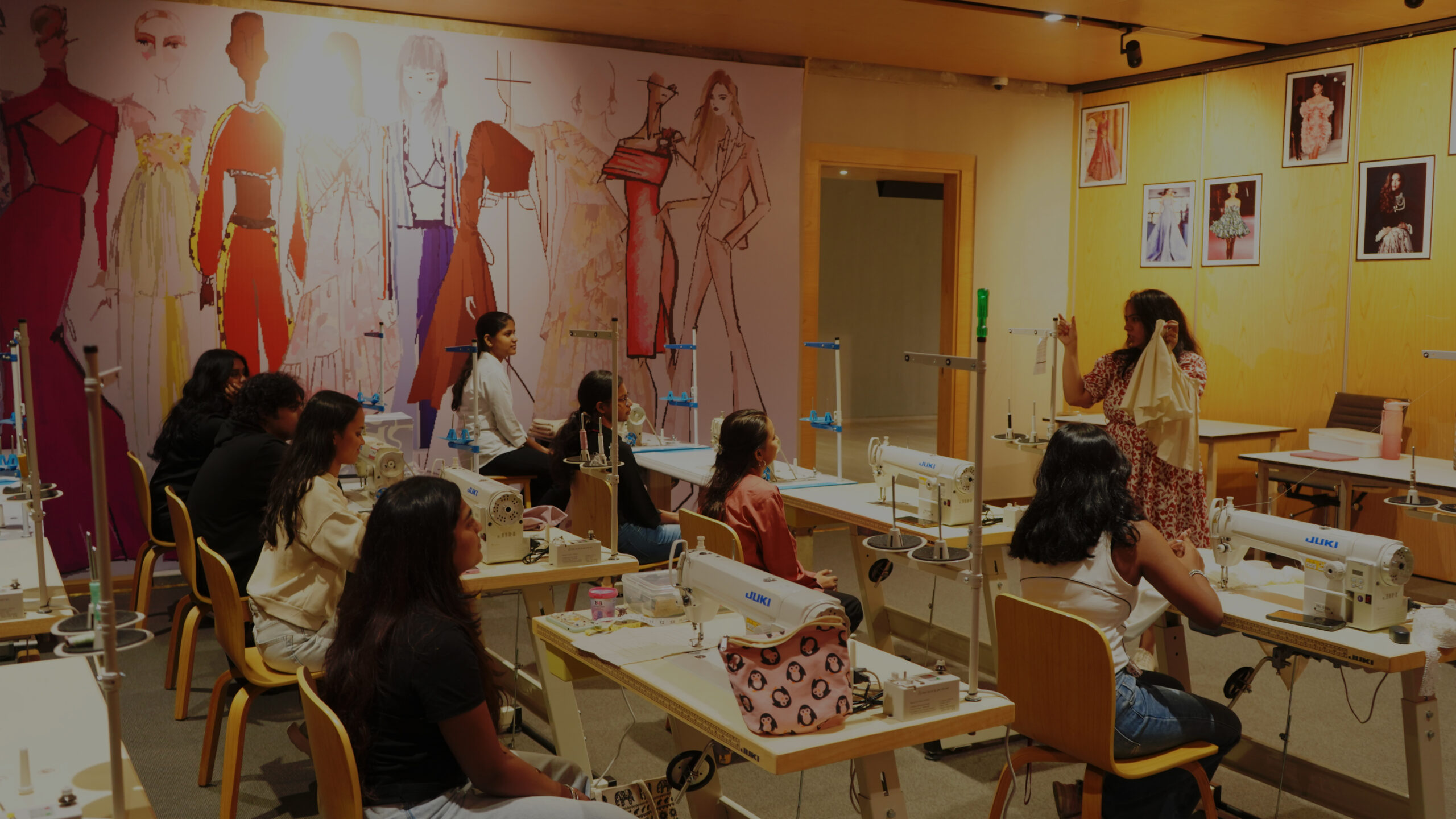
For instance, the integration of smart textiles is adding to the evolution of fashion in terms of static fashion to interactive fashion. Amid this transition, the top fashion design institutes in India are focusing on immersive hands-on experiences in order to make the aspirants industry-ready. For example, institutes like DY Patil School of Creative Studies, through its B.Sc Fashion & Apparel studies, are focusing on hands-on experience where students can seamlessly adapt both in traditional and emerging platforms.
Rise of Sustainability In Fashion Education
From a niche curriculum, sustainability is currently emerging as a core curriculum requirement in modern fashion education. The rise of sustainability in fashion education is driven by environmental urgency, consumer demand and ethical production to prepare future designers for a sustainable future of the fashion industry.
Students are exploring:
- Bio-fabricated materials like mycelium leather (mushroom-based textiles)
- Recycled fibres designed for full circularity
- AI-led production systems that reduce overproduction
The textile industry contributes 6–8% of global CO₂ emissions, and even a single kilogram of cotton can consume up to 10,000 litres of water. So the fashion design colleges in India have had to evolve, as the industry needs graduates who think of sustainability as more than a buzzword.
How Fashion Is Evolving Beyond Seasonal Cycles
Fashion is no longer governed by rigid seasonal cycles, and this shift is redefining the way students must approach the discipline. Traditionally, fashion education was structured around clearly defined frameworks like Spring/Summer and Autumn/Winter, providing a predictable rhythm to design and production. Today, however, these boundaries are increasingly fluid. Heavier fabrics such as suede and denim are being incorporated into summer collections, while textures like tulle and sequins are re-emerging across seasons, reflecting a growing demand for versatility and sensory richness.
This evolution is not merely aesthetic; it is shaped by changing consumer behaviour, climate variability, and the rapid influence of digital culture. As a result, fashion education must move beyond calendar-based thinking. Students need to develop the ability to interpret consumer psychology, analyse data-driven trends, and respond to cultural shifts in real time.
In this context, relevance is no longer defined by season but by awareness and adaptability.
Where DY Patil School of Creative Studies Fits Into This Evolution
Amid the transition of the fashion industry from seasonal fashion to smart textiles, the conversion of fashion education moves from concept to application. The contemporary developments in the fashion industry present exciting opportunities for aspirants; however, they can also be complex and demanding. This is precisely where the choice for the top fashion design institutes in India becomes critical.
At DY Patil School of Creative Studies, fashion education isn’t treated as a fixed curriculum; it is constantly updated as per the industry standards to maintain industry alignment.
Here, Students are exposed to:
- Emerging fashion technologies that align with global industry shifts
- A global fashion perspective, not limited to regional trends
- A learning environment that focuses on competency, not just creativity
- Integration of design thinking with real-world applications
There’s a noticeable emphasis on preparing students for a fashion ecosystem that is:
- Data-driven
- Technology-integrated
- Sustainability-focused
This is where the curriculum goes beyond aesthetics.
Reimagining Fashion Education From Expression to Responsibility
The changing curriculum of fashion education reflects on how the discipline is understood and practised. During a bachelor’s degree in fashion design in India, students are exposed to industry standards from day one, which makes fashion education more than a creative expression. It encompasses:
- Systems
- Impact
- Responsibility
This changes how students view and approach contemporary fashion education.
In this evolving context, fashion is approached with a greater sense of awareness, purpose and accountability.
Career Scope After B.Sc. Fashion & Apparel studies
The B.Sc Fashion & Apparel Studies course offered by the DY Patil School of Creative Studies enables students to think creatively and approach fashion with awareness. Job roles that a B.Sc in fashion graduate can expect include:
- Fashion Designer
- Fashion Buyer
- Merchandiser
- Product Developer
- Fashion Stylist
- Fashion Marketing and PR Specialist
- Fashion Retail Manager
- Fashion Consultant
- Sustainable Fashion Specialist
A Final Thought
There was a time when fashion education was about keeping up with trends. Now, it’s about staying ahead of systems. As a result, fashion design colleges in India are upgrading their curriculum towards smart fashion instead of fast fashion. The contemporary classrooms reflect that change, quietly, steadily, where the future is already being designed. Hence, if sustainable fashion and design thinking based on a hands-on experience is your calling, then DY Patil School of Creative Studies is the right choice for you.
Published on April 24, 2026
Contact us
