


Importance of Mental Health Awareness and Well-Being

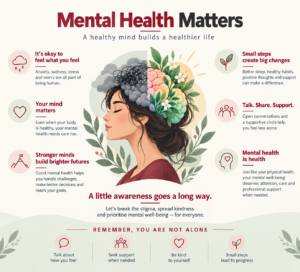
Mental health plays an important role in the overall health of individuals. Mental health affects how we react to different situations in life, how we behave, how we cope with the challenges, and how we make our decisions. Even people who are physically healthy may need mental health for their overall well-being.
People go through different emotional encounters every day: they may feel anxious, depressed, and worried in some situations. Thus, it is important to ask help when emotional or psychological issues arise.
Overall mental health is something one should discuss the importance and awareness, and implement in one’s life.
What Is Mental Health?
According to World Health Organization –
“Mental health is a state of mental well-being that enables people to cope with the stresses of life, realize their abilities, learn well and work well, and contribute to their community.”
Mental health is not always the same. It can be different throughout one’s life due to many factors, like :
- Physical health
- Family and social relationships
- Work or study situation
- Financial situation
- Life events
- Sleeping and lifestyle habits
- Stressful or traumatic experiences
- Availability of support
A person’s good mental health does not always mean that he or she is happy all the time. A good mental health means the ability of a person to experience different emotions, and effectively deal with everyday problems and seek support when necessary.
Published on October 10, 2026
Why Is It Essential to Be Aware of Mental Health?
Psychological well-being is an important part of overall well-being and mental health. Awareness about mental health plays a key role in identifying mental health concerns.
Although mental health awareness is being raised, there are still many misconceptions as well as stigmas regarding mental health. This prevents people from talking about their problems or getting professional help. For instance, people may be afraid of being judged, misunderstood, or treated differently if they mention their mental health issues.
By creating awareness, we can try to eliminate some of these barriers related to mental health.
Mental health awareness can contribute to people by:
- Helping people understand common mental health issues
- Helping people recognize reasons for changes in their mood, thoughts, and behavior
- Improving understanding of how to cope with stress
- Encouraging healthy conversations about mental well-being
- Helping people support friends, family members, and coworkers
- Encouraging people to seek professional assistance whenever necessary
- Helping people find reliable information concerning mental health issues

Common Mental Health Issues
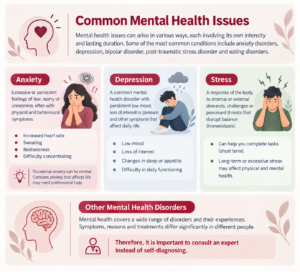
Mental health issues can arise in various ways, each involving its own intensity and duration. Common mental health conditions include anxiety disorders, depression, bipolar disorder, post-traumatic stress disorder, and eating disorders.
Anxiety
Anxiety is an emotional state characterized by excessive or persistent feelings of fear, apprehension, worry, or uneasiness. It is often accompanied by physical and behavioral symptoms such as an increased heart rate, sweating, restlessness, and difficulty concentrating.
Anxiety involves feelings of worry or fear. Occasional anxiety can be a normal response to stressful life situations. However, persistent anxiety that interferes with daily life may be a reason to seek help from a specialist.
Depression
Depression is a common mental health disorder characterized by a persistently low mood, loss of interest or pleasure in activities, and associated emotional, cognitive, physical, and behavioral symptoms that can impair an individual’s daily functioning.
Stress
Stress is a physiological and psychological response of the body to internal or external demands, challenges, or perceived threats that disrupt or challenge an individual’s normal state of balance (homeostasis).
Stress is a human response to challenging situations. Short-term stress may help people complete tasks, but prolonged or excessive stress can negatively affect both physical and mental health.
Other Mental Health Disorders
Mental health encompasses a wide range of disorders and experiences. Symptoms, causes, and treatments can differ significantly from person to person. Therefore, it is important to consult a qualified professional rather than attempt to self-diagnose.
Recognizing Changes in Mental Wellness
Being aware of possible warning signs can help people understand whether they might need more help.
Changes that should be taken into consideration consist of:
- Recurring sadness or low mood
- Ongoing worrying
- No longer being interested in things that one used to enjoy
- Noticing drastic changes in sleep patterns
- Observing significant fluctuations in eating habits
- Having problems focusing
- Experiencing consistent hopelessness
- Becoming isolated
- Being unable to cope with daily responsibilities
- Feeling irritable and seeing emotional changes
- Bottling up feelings and resorting to the increased using of alcohol or drugs.
Experiencing some of the above signs does not automatically indicate that a person has a mental disorder. Nevertheless, if any of the symptoms persist, becomes unmanageable, or disrupts a person’s everyday life, contacting the healthcare professional will surely be a good idea.
Healthy Techniques for Managing Daily Stress
Stress is an inevitable component of life today. Pressure from school, work, finances, family obligations, and significant changes can all lead to this stress.
However, learning how to manage stress can help everyone face their day-to-day problems.Nonetheless, it should be known that changing behavior is not a substitute for professional help for the problems that relate to mental health.
Some of the practises to manage stress are:
Be Active
Different types of physical activities such as walking, biking, swimming, yoga, and different types of exercise will contribute to good health. Choose one that suits your state of health and your abilities.
Sleep Regularly
Proficient sleeping is imperative for mood, concentration, energy, and health. People should endeavor to establish an efficient sleeping routine.
Socialize
Good conversations with family members, friends, colleagues, or community members are important for emotional and practical support.
Take Breaks from Work
Working or studying for too long may lead to the lack of energy and stress.
Engage in Your Favorite Activities
Hobbies and interests such as painting, listening to music, reading, and spending time outdoors will help you relax and enjoy yourself.
Use Effective Coping Techniques
Relaxation and breathing techniques, as well as other positive ways of coping, can help people deal with stress.
Mental health awareness involves not only taking care of one’s mental health, but also understanding how to help others.
When someone opens up about their struggles with mental health, the first thing to do is to listen to them without judgement.
Supporting someone experiencing mental health difficulties begins with listening to them patiently and without judgment. Their concerns should be taken seriously, while avoiding negative comments or criticism. It is important to ask them how they can be supported and encourage them to seek professional help when necessary. Staying in regular contact can help them feel supported and less isolated. At the same time, their privacy and personal boundaries should always be respected.
It is also necessary to understand the importance of personal boundaries. Supporting someone does not mean being responsible for his/her mental health.
Breaking Stigma About Mental Health
Mental health remains a challenge for today’s world. Stigma is one of the biggest challenges for individuals who need help with mental health. Making the conversation about mental health beneficial first requires using respectful manner of speech, distributing trustworthy information, and realizing that mental health problems can affect people of different backgrounds.
Mental health must be discussed openly and with all the compassion we usually apply while discussing physical health.
Mental Health in Students and Young Adults
Young people and students are subject to various challenges brought about by studying, job decisions, exam procedures, relationships and other social pressures. Academic worries and fear about the future can be a reason for stressful states of mind.
Colleges and universities can help to improve students’ mental health by healthy communication, providing access to helpful counselors, and ensuring that students know when it is time to seek assistance.Students must lead a healthy lifestyle, stay in touch with good people, take breaks and ask for help whenever necessary.
Mental health is a crucial component of overall wellness, in the same way; workplace mental health is equally important. Work stress, plenty of work, overloads caused by long hours, difficulty in achieving work-life balance, disputes in the workplace, and anxiety regarding job security – all these are potential stressors.
Awareness is necessary at educational institutions and workplaces because academic pressure, overload, relationships, and other issues can harm mental health.
When is it reasonable to ask the professionals for help?
There are no strict rules to ask for help. If the psychological/ emotional problems are already there and difficult to cope with, one should seek professional help.
Help with mental health issues is especially urgent in a case of suicidal thoughts and actions.
In such cases, a person in a need of help should not hesitate regarding asking help from the appropriate source.
Mental wellness does not entail getting rid of every negative emotion and sidestepping every stressful experience. Rather, it consists of knowing how to use appropriate coping mechanisms, tools and support systems in navigating life’s situations.
Conclusion
Overall Mental Health offers an opportunity to launch discussions on mental wellness, although mental health requires attention every day of the year.Raising awareness about mental health helps people to recognize change in mental state, to know when support is needed, and be more open for professional help.
Published on October 10, 2026
Contact us
