


Importance of Turmeric in Ayurveda: Traditional Uses, Benefits and Precautions
Turmeric is one of the most important spices in any Indian household. Apart from the bright yellow color, it brings to food delicious flavor and has been used for centuries in traditional medicine. In Sanskrit, it is called Haridra – the most well-known herb in Ayurveda. Turmeric has been part of Indian cuisine and domestic folk healing. It has been used in food preparation, cosmetics, and medicine.
Turmeric contains curcumin – a natural antioxidant. Various studies have been conducted to examine the potential impact of this substance on the human body. However, it is essential to note that curcumin’s effectiveness is conditional and depends on the individual’s features, the dosing regimen, and the method of introduction. Turmeric is useful for health, but that does not mean it is used to treat all the diseases.
The importance of turmeric in the Ayurveda is directly related to its use in food, medicine, and cosmetics.
Published on October 14, 2026
What is turmeric known in Ayurveda?
Turmeric, known as Curcuma longa, is a flowering plant in the ginger family. A rhizome (underground stem) of the plant is dried and then ground into the yellow powder as turmeric.
Turmeric is known as Haridra in Ayurveda, which is used in various Ayurvedic medicines. Its uses and properties in various treatments are described in many ancient and traditional practices as well as in texts.
Ayurvedic doctors make use of various herbs for treating patients depending on their properties and their effects on the body. It is important to understand that the same preparation and cure can’t be used for all. Herbs and products like turmeric have traditional applications, but they are not always suitable for the same diseases or conditions.

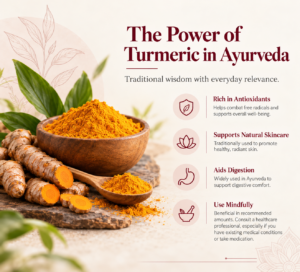
Herbs in Ayurveda are traditionally categorized under certain characteristics, such as:
- Rasa: Taste. Turmeric is bitter.
- Guna: Qualities. Turmeric is light and dry.
- Virya: Potency. Traditionally classified as heating.
- Dosha: Body types that may benefit from the substance.
Turmeric is often associated with Kapha.Turmeric may also be helpful for Pitta at many times.
These properties in turmeric are based on the traditional practice and text of medicine and they should not be considered to be modern medicine. Ayurvedic doctors evaluate patients and then will recommend different preparations and combinations of treatment based on their observations and experience.
Published on October 14, 2026
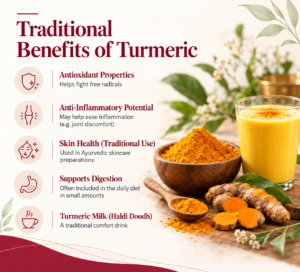
Turmeric and its Traditionally Recognised Health Benefits
Turmeric has been used in traditional Indian practices from ancient times. Its importance is associated with both its everyday culinary use, as well as its use in Ayurvedic preparations.
- Antioxidant Properties
Turmeric contains curcuminoids, including curcumin, that have been studied for their antioxidant properties. - Anti-Inflammatory Potential
Curcumin has also been studied for its anti-inflammatory effects. Certain clinical trials suggest that turmeric or curcumin preparations may help to ease the symptoms of knee osteoarthritis, particularly pain and stiffness.
However, the research for these properties is still limited, and more research is needed before the conclusions can be drawn. - Traditional Uses for Skin Health
Turmeric has been used in various Ayurvedic external preparations for skin care. It is a familiar ingredient in traditional household skincare preparations.
However, turmeric does not guarantee to cure all skin problems. It may irritate and cause allergic reactions in some people, and its strong pigment can temporarily stain the skin or clothing.
Turmeric in Ayurvedic Skincare
Turmeric has a long history in Indian beauty practices. It is often used in preparations associated with weddings and other celebrations.
In traditional practice, turmeric may be combined with ingredients such as gram flour or other suitable substance to make a topical paste. These preparations are primarily traditional cosmetic practices and they should not be considered as proven treatments for skin diseases.
Turmeric in the Ayurvedic Diet
One of the easiest ways of using turmeric into everyday life is through food. Usually, turmeric is consumed in much smaller quantities.
Turmeric is often added to dishes in smaller quantities. It adds colour, flavour and characteristic aroma to each dish.
- Turmeric Milk: A Traditional Preparation
Turmeric milk, often called haldi doodh, is a traditional household preparation in India. It is commonly consumed as a warm beverage and is associated with traditional comfort and wellness practices.Although popular in traditional practice, there is insufficient claim that turmeric milk can cure infections, clear toxins or reliably prevent disease.
Understanding Curcumin: The Science Behind Turmeric
Curcumin is one of the key active constituents of turmeric that gives it its yellow colour. Scientific studies have proved its antioxidant and anti-inflammatory activity and its potential role in a number of different health conditions.
Turmeric in Traditional Ayurvedic Formulations
Turmeric is used in selected Ayurvedic treatments with traditional practices and the purpose of the preparation. It may also be combined with other herbs or ingredients as part of an individualised treatment plan.
In Ayurveda, the selection of treatment depends on the person’s symptoms, constitution, digestion and other factors. A qualified Ayurvedic practitioner can assess whether a formulation is appropriate.
People should avoid self-prescribing concentrated herbal formulations or assuming that a product is safe simply because it is natural. Product quality, ingredients, dosage and possible interactions are all important.
Safety Precautions and Who Should Be Careful
Although turmeric is commonly used in food, medicinal doses and concentrated supplements may be risky.
The National Center for Complementary and Integrative Health recommends caution in using oral products, which may cause health risks.
Ayurveda and Modern Research: A Balanced Perspective
Turmeric shows the value of traditional knowledge inspiring scientific research. Ayurveda has used Haridra in different preparations for generations, while modern research explores curcumin and other turmeric constituents to understand their biological effects.
However, traditional use in household and scientific evidence are two different things. Some research shows good results, but the evidence is insufficient to prove turmeric as a treatment.
A balanced approach is necessary while treatment which respects Ayurveda’s traditional context while applying current standards of safety and evaluation.
Conclusion
Turmeric remains an important ingredient in Ayurveda due to its traditional uses in food, skincare and selected herbal formulations.
Modern research into curcumin has revealed various medical uses, but more high-quality evidence is needed for claimed health benefits. Using turmeric in ordinary meals can be a practical option, while medicinal preparations and concentrated supplements require more care.
Understanding both the traditional uses and limitations of turmeric helps people understand the spice. The best approach combines informed use of Ayurveda and reliable scientific information as well as appropriate professional healthcare.
Published on October 14, 2026
Contact us
