


Spine Health: Understanding the Spine, Common Disorders and Medical Care
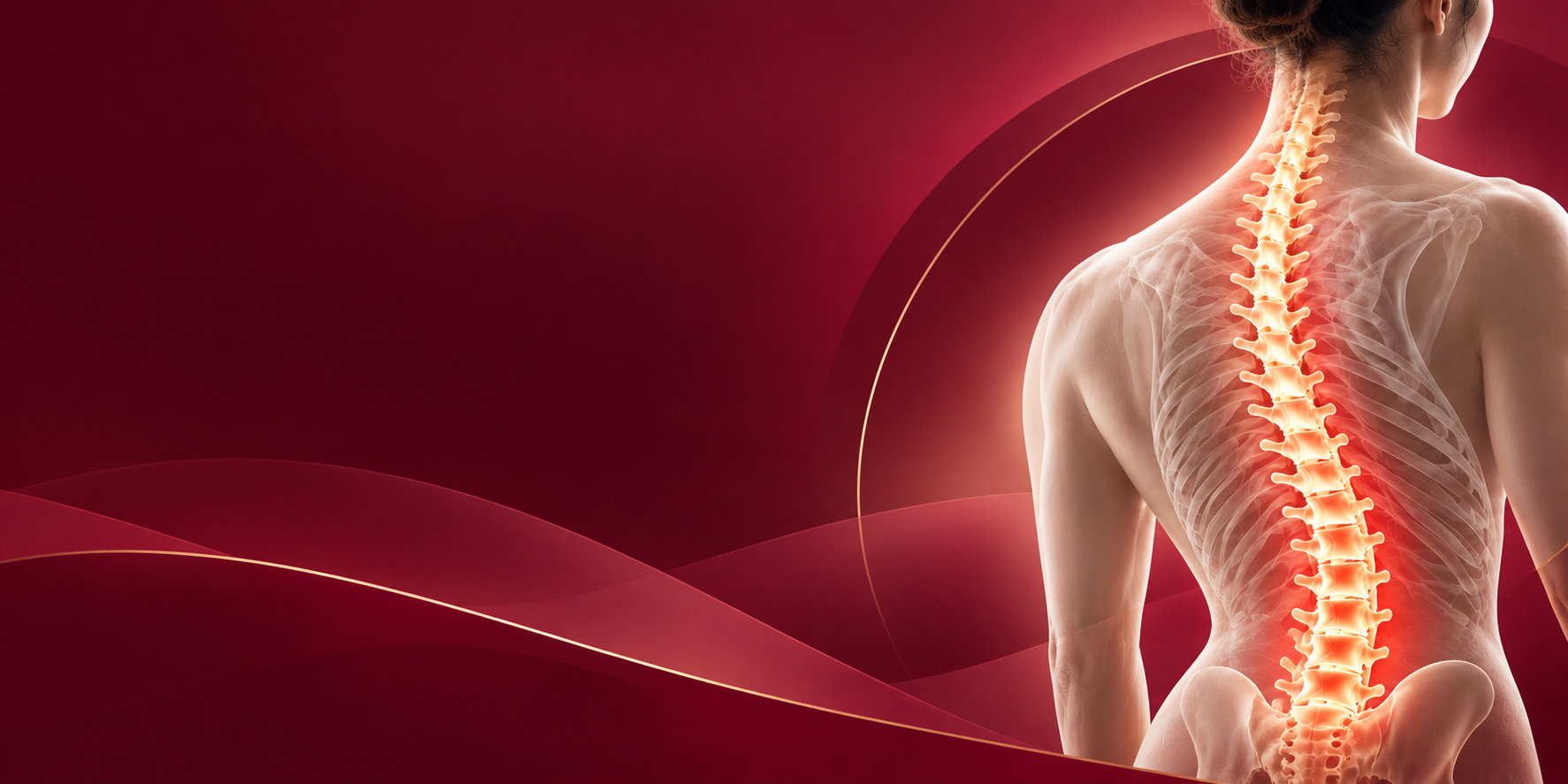
The spine is an important structure in our body. It provides support to the head and torso. The spine also helps in making movements, maintaining posture and protecting the spinal cord. In our day-to-day life activities such as from bending to walking to sitting and standing all our actions depend on the cooperation of spine, muscles, ligaments, joints and nerves.
A good spinal health is important for good mobility, independence in activities and high quality of life. But the spine can also face problems which result in back pain, neck pain, intervertebral disk diseases and injuries.
Understanding the anatomy of the spine and recognizing its symptoms for diseases is important for good spine health. Consulting a doctor whenever needed and taking treatment according to the diagnosis is important. It is advisable to consult a doctor if the pain is strong, enduring and accompanied by any neurological signs.
Published on October 17, 2026
Understanding the Spine:
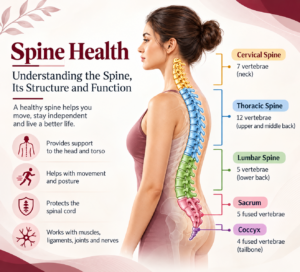
The spinal column consists of components like bones (vertebrae), intervertebral discs, joints, ligaments, and the muscles that support them.
It is divided into five parts:
- Cervical spine: Seven vertebrae present in the neck.
- Thoracic spine: Twelve vertebrae present in the upper and middle back.
- Lumbar spine: Five vertebrae present in the lower back.
- Sacrum: A bone made up of five fused vertebrae.
- Coccyx: Also known as the tailbone, generally made up of four fused vertebrae.
Intervertebral discs are soft, cushion-like structures present between most vertebrae. They absorb pressure, reduce friction, and allow the spine to bend and move comfortably. The vertebral canal is a passage within the spine that protects the spinal cord from injury. Spinal nerves carry messages between the spinal cord and different parts of the body, helping control movement and carry sensations such as touch, pain, and temperature.
Thus, all these components in the spinal area ensure stability, flexibility, and safety of the individual.

Common Spinal Conditions
Several conditions can affect the spine and surrounding structures.
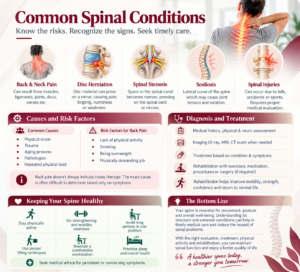
Back and Neck Pain
Back and neck pain can begin from muscles, ligaments, joints, discs, nerves etc. Low back pain is non-specific which means that a single structural cause cannot be pinpointed.
Intervertebral Disc Herniation
Intervertebral disc herniation takes place when disc material crosses normal boundaries of its location. In certain cases, disc material can irritate or press on a nerve that spreads to the arms or legs, along with tingling, numbness, or weakness.
Spinal Stenosis
Spinal stenosis is a condition in which the space inside the spinal canal becomes narrow, putting pressure on the spinal cord or nerves.
Symptoms of the condition may vary according to the area and severity of constriction.
Scoliosis
Scoliosis refers to the lateral curve of the spine which may cause tensing of joints and vertebrae rotation. Some cases of scoliosis require monitoring while others warrant treatment.
Spinal Injuries
Spinal fractures or spinal cord injuries may arise as a result of falls, road accidents and sports injuries. If spinal injury is suspected proper medical examination will be required.
Reasons and Risks Associated with Spinal Disorders
There are various causes related to spine such as physical strain, trauma, aging process, presence of pathologies and ongoing and/or repeated physical load types.
Some of the risk factors for back pain can be related to a lack of physical activity, smoking, being overweight and having a physically demanding job.
It is worth noting that back pain doesn’t always indicate tissue/structural impairment and many times it is impossible to determine the cause relying solely on symptoms.
Diagnosis and Treatment of Spinal Conditions
A medical assessment is necessary to understand the complete medical history, physical assessment and a neuro assessment. Imaging such as X-ray, MRI or CT scan may be performed when clinically needed.
The treatment for the spine depends on the condition the person has and the symptoms they are facing. The medical professionals assess the condition, changes in the physical activities and advise rehabilitation through physical exercises, medications, chosen procedures, or surgical intervention if needed.
Rehabilitation can be very helpful during recovery because it increases mobility, strength, confidence and ability to get back to normal life.
Keeping Your Spine Healthy
Certain actions make spinal health better:
- Staying physically active.
- Including suitable strengthening and mobility exercises.
- Avoiding to remain in one position for prolonged periods.
- Using appropriate lifting techniques and avoiding sudden, excessive loads.
- Maintaining a comfortable workstation and supportive sitting habits.
- Prioritizing sleep and overall health.
- Seeking medical advice for persistent or concerning symptoms.
There is no single posture or exercise hook involved in preventing spine problems. The goal is to keep moving, strong and functional while adapting activities.
Conclusions
Spine health is important for movement, posture and overall well-being. Understanding the structure of the spine and knowing common spinal conditions may help in timely medical assessment. This can help to reduce the impact of spinal problems.
Through medical evaluation, appropriate treatment, physical activity and rehabilitation, individuals can take practical steps towards maintaining spinal function and quality of life.
Published on October 17, 2026
Contact us
