

Certificate Program in Digital Filmmaking
DYPU has an educational approach that seeks to create a learning experience that will prepare students for the realities of the modern world.

Programme
Overview
The Certificate Program in Digital Filmmaking at the School of Creative Studies, D. Y. Patil Deemed to be University, Navi Mumbai, is a six-month, camera-first skill programme for learners who want a credible entry into the screen industry without committing to a three or four-year degree. The programme takes a learner from a blank page to a finished short film, moving through story and script, camera, lighting, sound, and direction, and closing in the edit suite with colour and sound design.
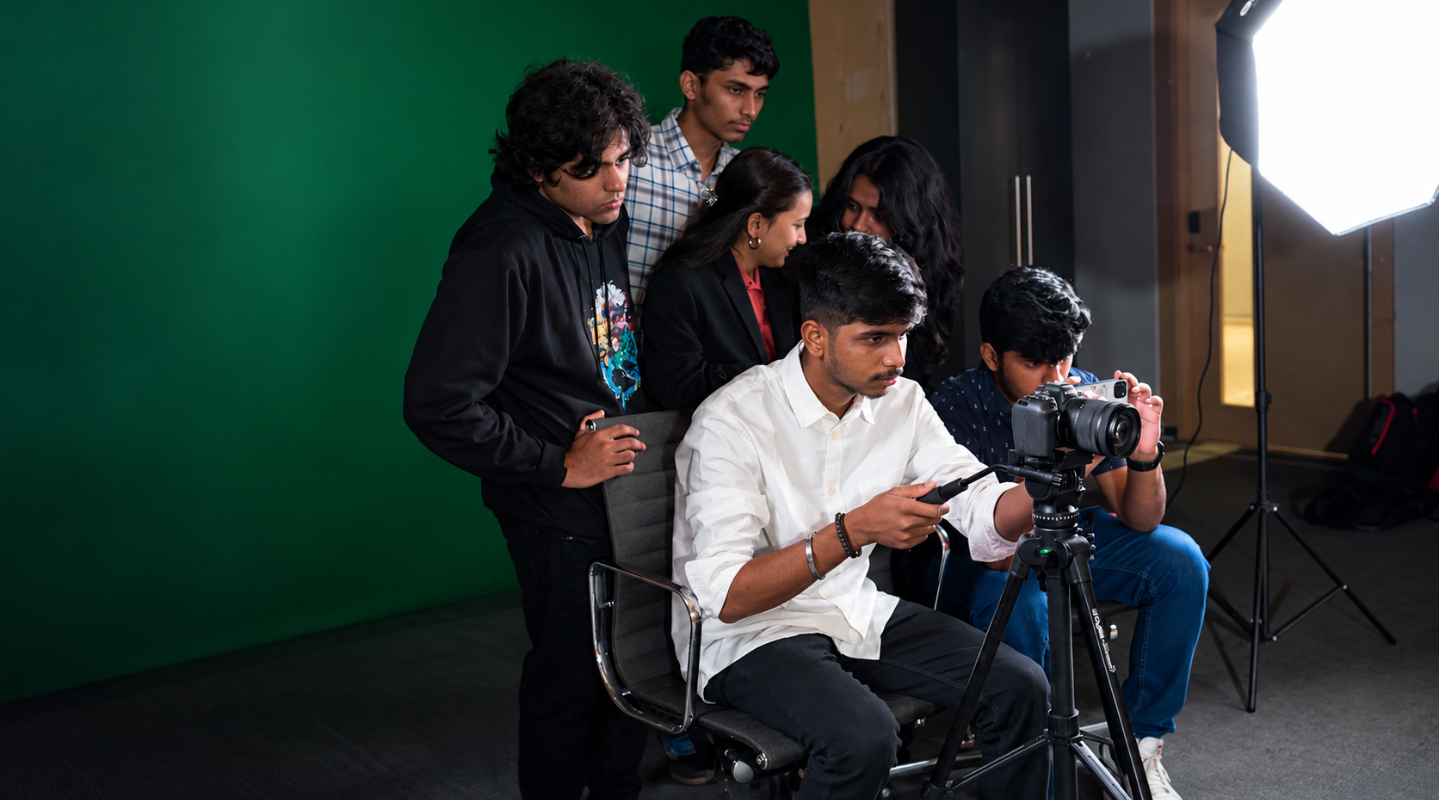
Teaching is workshop-led, with shoots from the opening weeks rather than after a long theory block. Learners work inside DYP Interactives, the university’s in-house production studio, using studio equipment and working to studio timelines. The programme closes with a one-month capstone anchored to a live industry project, so the final piece in the learner’s reel is real work made to a real brief and not a classroom exercise.
Evening (weekday) and weekend batches are structured so learners can hold a job, run a freelance practice, or continue Class 11 and 12 alongside the programme. Upon completion, learners can pursue careers as assistant directors, camera assistants, junior editors, content creators, corporate and brand film makers, social media video producers, wedding and event film directors, or freelance videographers.
| Programme Details | |||
| Programme Name | Certificate Program in Digital Filmmaking | Fees (2026–27) | Rs. 3,00,000/ full programme |
| Duration | 6 months | Mode | On-campus, Evening (weekday) and Weekend batches |
| Certification Awarded | Certificate in Digital Filmmaking | School | School of Creative Studies, D. Y. Patil Deemed to be University |
| Focus Areas | Story, Script and Visual Storytelling; Camera, Lighting and Cinematography; Location Sound and Direction; Editing, Colour and Sound Design | Capstone | One-month live industry project at DYP Interactives, followed by showreel assembly and review |
| Equipment | DSLR and cinema camera bodies, lenses, lighting kits, microphones, field recorders, and gimbals | Software | Industry-standard editing, colour, and sound post-production toolchain |
| Eligibility | Class 10 pass from a recognised board. No prior film or media background required. | Studio Access | DYP Interactives, the university’s in-house production studio |
| Seats | 30 | Deliverables | One finished short film, one live industry project credit, and a reviewed personal showreel |

Eligibility Criteria and
Certification Awarded
- Class 10 pass from a recognised board.
- Open to school students, Class 11 and 12 learners, working professionals from any field, and practising content creators.
- No prior film or media background required.
On successful completion, learners receive the Certificate in Digital Filmmaking from the School of Creative Studies, D. Y. Patil Deemed to be University.
Areas of
Focus
The curriculum builds depth across four areas:
- Story, Script and Visual Storytelling.
- Camera, Lighting and Cinematography.
- Location Sound and Direction.
- Editing, Colour and Sound Design.
Programme
Highlights
- Six-month, camera-first programme with practical shoots from the opening weeks.
- Complete production cycle covered, from script to final delivery.
- One-month capstone anchored to a live industry project at DYP Interactives.
- Workshop-led teaching inside a working production studio.
- Access to professional cameras, lenses, lighting, and sound equipment.
- Training on industry-standard software.
- Showreel assistance built in as a graded deliverable with faculty and industry review.
- Evening and weekend batches suited to working professionals and school students.
- No prior film background required.
Key Features of the
Programme
- Camera-first structure with practical shoots from the first weeks rather than a deferred theory block.
- Live industry project at DYP Interactives as the closing capstone.
- Small-unit working method that mirrors professional set practice.
- Access to DSLR and cinema camera bodies, lenses, lighting kits, microphones, field recorders, and gimbals.
- Showreel assembly and review as a graded programme outcome.
- Work reviewed by faculty and industry professionals before release.
- Flexible evening and weekend scheduling alongside school, work, or freelance practice.
Programme
Educational Objectives
Learners of this programme will:
- PEO1: Work confidently as entry-level screen professionals, contributing on set across camera, sound, direction, and post-production roles.
- PEO2: Conceive, write, and direct short-form screen content for streaming, social, and commercial platforms.
- PEO3: Operate to professional studio standards of scheduling, unit discipline, safety, and delivery.
- PEO4: Build an independent creative practice or progress into a diploma or degree programme in film and screen production.
Upon completion, learners will be able to:
| Programme Specific Outcomes | |
| PSO1 | Develop an idea into a logline, script, storyboard, and shot list using correct screenplay format and the grammar of shot sizes and camera movement. |
| PSO2 | Operate camera and lighting equipment to achieve a defined visual intent, with control over exposure, lens choice, composition, continuity, and coverage. |
| PSO3 | Record clean location sound, direct performance including with non-actors, and run a small unit through a scheduled shoot. |
| PSO4 | Edit, grade, mix, and deliver a finished film to platform specifications for streaming and social distribution. |
Fee Structure
2026-27
Rs. 3,00,000 for the full six-month programme.
Programme
Scope
The Certificate Program in Digital Filmmaking prepares learners for immediate, hands-on work across the screen and content industries. Sustained growth in short-form, branded, and platform content across OTT services, brand channels, agencies, and social media has created a steady requirement for crew who can shoot, cut, and deliver without a long training ramp.
Graduates are equipped for assistant and junior crew roles in production houses, content studios, advertising agencies, and event and wedding film companies, as well as for independent practice as creators and freelance videographers. The programme also serves as a foundation for further study, including the Diploma in Filmmaking and Screen Production and undergraduate degrees in film and media.
Learning
Modules
Months 1 to 2: Story and Craft Foundation. Visual storytelling, idea to logline to script, three-act and short-form structure, screenplay format, storyboarding and shot listing, the grammar of shot sizes and camera movement.
Months 2 to 3: Camera and Light. Camera operation and exposure, lenses and focal length, composition and framing, three-point and natural lighting, working with available light, basic grip and rigging, continuity and coverage.
Months 3 to 4: Sound and Direction. Location sound recording, microphone selection and placement, directing performance, working with non-actors, blocking, script breakdown and shooting schedules, running a small unit on set.
Months 4 to 5: Post Production. Editing rhythm and assembly, cutting for emotion, sound design and mixing, music and rights, colour correction and grading, titles and delivery formats for streaming and social platforms.
Month 6: Capstone. One month on a live industry project at DYP Interactives, followed by showreel assembly and review.
Internship and
Live Industry Project
The Certificate Program in Digital Filmmaking builds industry exposure into the programme structure rather than treating it as a separate placement exercise. The final month is spent on a live industry project at DYP Interactives, the university’s in-house production studio, where learners work to a real client brief on a studio schedule alongside studio professionals.
This structure means every graduate leaves with at least one verifiable industry credit in addition to the short film produced during the course. Showreel assembly and review sit at the close of the project, with faculty and visiting industry professionals assessing the reel before it is released to prospective employers.
Placement
Opportunities
Learners graduate with a finished short film, a live industry project credit, and a reviewed showreel, which together form the evidence hiring decisions in this sector are made on. Typical opportunity areas include:
- Film and Television Production Units.
- OTT and Streaming Content Production.
- Branded and Corporate Film Production.
- Advertising and Agency Video Teams.
- Social Media and Digital Content Studios.
- Wedding, Event, and Documentary Film.
- Post Production and Editing Houses.
- Independent and Freelance Practice.
Career paths: Assistant director, camera assistant, junior editor, content creator, corporate and brand film maker, social media video producer, wedding and event film director, freelance videographer.
Who This
Programme Is Best For
- Class 10 and 12 students who want a skill and a reel before or alongside a degree.
- Working professionals from any field who want to move into content and film.
- Content creators, YouTubers, and Instagram filmmakers who want craft discipline behind their instinct.
- Wedding and event videographers looking to move into narrative and commercial work.
- Anyone who needs a fast, credible entry point into the screen industry without committing to three or four years.
Why Choose
DY Patil University for Certificate Program in Digital Filmmaking
- A six-month, camera-first programme that gets learners on set from the opening weeks.
- Full production cycle taught, from script to delivery.
- One-month capstone on a live industry project at DYP Interactives that produces a verifiable credit.
- Access to professional cameras, lenses, lighting, sound equipment, and an industry-standard post-production toolchain.
- Showreel assembly and review as a graded deliverable before release to employers.
- Evening and weekend batches so learners can continue school, work, or freelance practice.
- Open entry from Class 10 with no prior film or media background required.
- Direct progression option into the Diploma in Filmmaking and Screen Production or an undergraduate degree in film and media.
FAQ's
- What is the Certificate Program in Digital Filmmaking at DY Patil University?
- What are the eligibility criteria?
- What is the fee?
- Which equipment and software are used?
- Is there an internship or live project?
Admission
Form
Contact us
