

M.Sc. in Immersive Media and Game Design
DYPU has an educational approach that seeks to create a learning experience that will prepare students for the realities of the modern world.

Programme
Overview
The M.Sc. in Immersive Media and Game Design is a two-year Master’s programme at the School of Creative Studies, D. Y. Patil Deemed to be University, Navi Mumbai. It follows the National Education Policy 2020 and covers game development, real-time 3D content creation, virtual production, and immersive media.
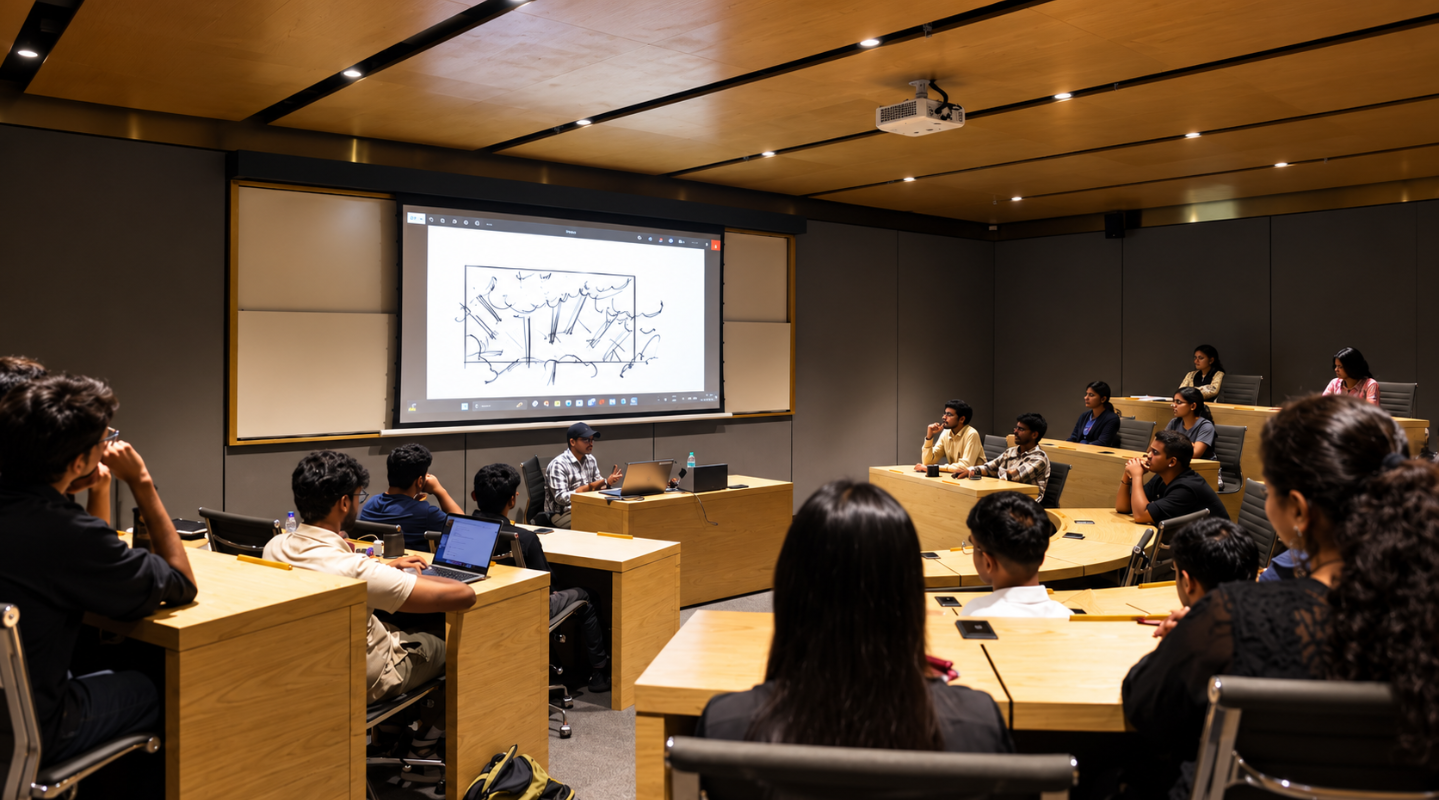
Students work with the tools used in the industry, including Unreal Engine, Unity, and Houdini, and learn game design, virtual production workflows, and XR (VR and AR) development. The syllabus has been drawn up by comparing it with international game design and immersive media programmes.
Graduates typically move into roles as game developers, technical artists, VR/AR developers, virtual production specialists, procedural content artists, or game designers across gaming, film, animation, simulation, and interactive media.
| Programme Details | |||
| Programme Name | M.Sc. in Immersive Media and Game Design | Fees (2026–27) | INR 6,50,000/- per year |
| Duration | 2 years | Mode | Full-time, on-campus |
| Degree Awarded | Master of Science (M.Sc.) in Immersive Media and Game Design | School | School of Creative Studies, D. Y. Patil Deemed to be University |
| Accreditation | UGC | Alignment | National Education Policy (NEP) 2020 |
| Focus Areas | Game engines (Unreal Engine, Unity), procedural workflows (Houdini), virtual production, ICVFX, motion capture, XR (VR/AR) development, technical art, real-time 3D content creation | Specialisation Areas | Game Engine Mastery; Procedural Workflows; Virtual Production; XR Development; Technical Art |
| Selection | Aptitude Test and Personal Interview / Portfolio Review | Practical Component | Studio projects, Major Capstone Project, and final-semester internship |
| Eligibility | 3 or 4-year Bachelor’s degree in any discipline from a recognised university with minimum 45% aggregate marks (or equivalent grade) | Total Credits | 80 |
| Seats | 20 | Schedule | Monday-Friday 10:00-4:00 |

Programme
Eligibility
- A 3 or 4-year Bachelor’s degree in any discipline from a recognised university.
- A minimum of 45% aggregate marks (or equivalent grade) in the qualifying examination.
- Selection is based on an Aptitude Test and a Personal Interview or Portfolio Review.
Cut-offs, entrance test schedules, and interview dates change each cycle. Candidates should check the official DY Patil University admissions page before applying.
Areas of
Specialisations
The curriculum builds depth in five areas:
- Game Engine Mastery: Unreal Engine and Unity development for immersive experiences.
- Procedural Workflows: Houdini for procedural modelling, effects, and automated content generation.
- Virtual Production: ICVFX (In-Camera Visual Effects), motion capture, and real-time compositing.
- XR Development: Complete VR and AR game and experience development.
- Technical Art: linking creative direction with technical implementation.
Key Features of
the Programme
- Training in Unreal Engine and Unity for game systems, real-time rendering, and interactive experiences.
- Houdini modules for procedural content generation, FX, and environment design.
- Virtual Production Studio experience covering ICVFX, green-screen workflows, and real-time compositing.
- XR Labs for VR and AR development with access to industry hardware and platforms.
- Motion capture and performance systems training for animation, simulation, and character production.
- Broadcast technology for live production and virtual studio environments.
- Portfolio and demo-reel development support built into the final semester.
- Capstone project and industry internship for real-world application.
- Workshops and masterclasses from working professionals in gaming, VFX, and immersive tech.
Programme
Objective
Graduates of this programme will:
- PEO1: Work as technical artists and developers who can build immersive experiences using industry-standard tools and workflows.
- PEO2: Handle game design end-to-end, combining technical work with gameplay, narrative, and user experience.
- PEO3: Lead virtual production and real-time content projects using advanced tools and workflows.
- PEO4: Move into senior technical, creative, or leadership roles in gaming, film, or immersive media.
Fee Structure
2026-27
INR 6,50,000/- Per Year
Programme
Outcomes
| PSO1 | Design and build complete game systems using modern game engines with optimised performance and playable gameplay. |
| PSO2 | Create procedural content and visual effects in Houdini and plug them into real-time pipelines. |
| PSO3 | Run virtual production workflows including motion capture, ICVFX, and real-time broadcast systems. |
| PSO4 | Build immersive XR experiences with sound technical work and design thinking. |
Program
Scope
The programme prepares students for work in:
- Complete game development pipelines from concept to deployment.
- Real-time 3D content across gaming, film, simulation, and interactive media.
- Virtual production stages, ICVFX workflows, broadcast systems, and real-time compositing.
- Procedural modelling, FX, and environment generation in Houdini.
- Full-cycle development of immersive XR experiences.
- Performance capture, AI tools, and newer production techniques.
Sectors include gaming, film and VFX, animation, broadcast, architecture visualisation, training simulations, education technology, digital twins, and immersive media.
Syllabus
Internship
Students complete a mandatory internship in the final semester. Placements may be arranged in:
- Game design and development studios.
- VR/AR and immersive technology companies.
- Virtual production studios.
- Film, animation, and VFX pipelines.
- Simulation and training content studios.
- Real-time broadcast and live production companies.
- Indie game studios and creative start-ups.
The internship gives students a chance to apply their skills on live projects and build professional contacts before graduation.
Placement
Opportunities
Typical roles for graduates include:
- Game Developer / Gameplay Programmer
- Technical Artist (Real-Time / Game / XR / VFX)
- Unreal Engine or Unity Developer
- VR / AR Developer
- Virtual Production Specialist / ICVFX Artist
- Procedural Artist (Houdini FX / Environments)
- Motion Capture Technician / Performance Capture Specialist
- Real-Time Compositing Artist / Broadcast Graphics Artist
- Game Designer / Level Designer / Interaction Designer
Sectors that hire from this field include gaming, film and TV, VFX, animation, advertising, architecture, simulation, education technology, defence simulation, digital media, and interactive entertainment.
Top Recruiting
Organisations
Novella Films, Zoo Media, Balaji Telefilms, Famous studios, Chlorosynth, Warner Music, Lost Stories Music Academy, Works India, AdEngage, WPP, MSL, Kidoland ID, Burgundy Brand Collective, Zee Entertainment, Caanvas, Festa Bags, Advantus, and Festivals From India.
Why Choose
DY Patil University for M.Sc. in Immersive Media and Game Design
- A Master’s programme built around the actual tools the industry uses: Unreal Engine, Unity, Houdini, motion capture, and virtual production.
- Syllabus compared with international game design and immersive media programmes when it was designed.
- Portfolio and demo-reel work built into the final semester so students graduate with something to show recruiters.
- A mandatory internship at a game studio, VR/AR company, virtual production stage, or creative start-up.
- Workshops and masterclasses with working professionals from gaming, VFX, and immersive tech.
- Support for students who want to start their own indie game or immersive-content ventures.
FAQ's
- What is the M.Sc. in Immersive Media and Game Design?
- What are the eligibility criteria?
- What is the fee?
- Which tools and technologies are taught?
- Is there an internship?
Contact us
