


Nutrition for Muscle Recovery and Growth: Understanding Muscle Health, Repair, and Performance
Nutrition is the biological and physiological process by which living organisms take in, digest, absorb, and utilize food and water to support life, growth, repair, and overall health. Nutrition plays an important part for athletes and players for maintaining strength. Keeping muscles in a good condition helps us to be strong, fit and healthy. Everyone who participates in exercise should look after their muscles to help improve their performance in sport. However, having good muscles comes from doing the correct exercises, eating the correct foods, having a good plan in place and ensuring getting enough rest.
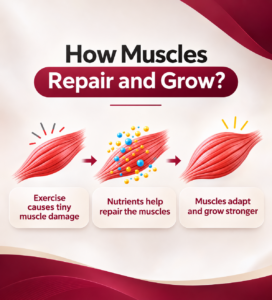
Strained muscles occur while performing any practice, exercise or strength training sessions which involve using muscles. Usually muscles will have some kind of damage to them and will be repaired using natural processes. Understanding how nutrition interacts with your exercise and recovery is key.
Published on November 19, 2026
Understanding Muscle Health and Recovery
Muscles consist of different tissues within the body. Muscle health can be achieved by having good muscle mass, stamina, flexibility and aerobic capacity.
Muscle recovery is an important process of allowing the body to repair itself after physical activity. When muscle tissues return to their previous condition, they regain muscle energy and start adapting to the training.

Nutrition and Muscle Growth and Repair
Nutrients provide energy and essential nutrients are needed to help muscles function, repair and grow. Eating a balanced diet will help the body respond to exercise and ensure you have enough energy.
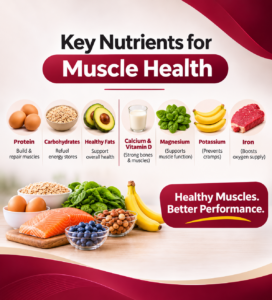
Important nutrients to eat:
- Protein to help repair muscles
Protein contains amino acids that help with muscle protein synthesis.
Protein can be found in eggs, dairy products, fish, chicken, soy beans, lentils and other pulses.
- Carbohydrates to provide energy
Carbohydrates are an important source of energy during moderate and high intensity exercise. They help to replace the glycogen stores in the muscles.
Wholegrains, oats, fruits, rice and millets help to meet carbohydrate needs.
- Healthy fats to help muscles function
Healthy fats are an important part of helping your body produce hormones, keep cells healthy and absorb fat soluble vitamins. Nuts, seeds, avocados and oily fish will provide healthy fats.
- Micronutrients to help muscles function
Micronutrients help muscles, nerves, oxygen and body tissues function properly.
- Vitamin D helps to facilitate muscle function.
- Calcium plays a key role in helping muscles contract.
- Magnesium helps your muscles and nerves function normally.
- Iron helps carry oxygen to working muscles.
- Potassium helps your muscles function properly and keeps fluid levels in your body balanced.
By eating a sufficient and balanced diet you will have all of the above nutrients.
Rest and Recovery
Having good muscles isn’t just about doing exercise. Ensuring you give yourself enough recovery time will help your body repair your muscle tissues and adapt to the stress.
Conclusion
Having good muscles and recovering your muscles isn’t just about eating protein and having a good plan. It is a combination of eating the right foods, having good physical exercise, getting enough rest, staying hydrated and being in good health.
Understanding how your muscles react to training and recover from physical stress can help anyone create a good exercise routine.
Published on November 19, 2026
Contact us
