


Spine Health in Sports: Injury Prevention, Performance and Recovery

The spine plays an important role for athletes. The athletes need to work on the aspects such as balance, and coordination. The spine is involved in multiple movements such as running, jumping, lifting, throwing and change of direction. All of these activities require the proper functioning of the spine alongside the help of trunk muscles, hips, and lower extremities.
The functional requirements for the spine may differ due to the nature of the sport an athlete participates in or their involvement in training. An athlete may suffer from back pains and various limitations associated with movements when exposed to sudden loads and inadequate recovery.
Thus, the spine health becomes an important part of athlete development and training.
Published on October 27, 2026
Overview of the Spine & Significance in Athletics
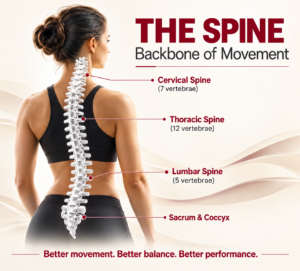
The spine includes vertebrae, intervertebral discs, joints, ligaments, and related muscles. The structure of the spine can be divided in three parts: cervical, thoracic, and lumbar, each of which are responsible for moving the head, twisting the trunk, bending, and transferring forces during physical activity.
The spine is also important for protection of the spinal cord and provides attachment points for muscles related to movement and posture.
Different sports may have different loads on the structures of the spine. Types of sports such as gymnastics, lifting weights, cricket, soccer, tennis, and running involve different amounts of load, rotation, impact, and repetition.

Common Issues Related to Spine in Sports
Strain and Back Pain
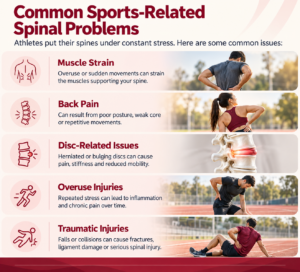
Strain of muscles or chronic back pain can occur during either sport practices or competitions. Symptoms can arise after sudden movements, increased workload or repeated physical activity, but the origin of symptoms is not evident sometimes.
Disc-Related Issues
There are occasions when the herniated disk leads to irritation of a spinal nerve that gives rise to pain, which can be perceived in another limb as well as to sensation of numbness or weakness. In such cases, the problem should be carefully evaluated and cannot be branded as mere training pain.
OverUse Injuries
Loading the body repeatedly can lead to such injuries as stress fractures of bones. For example, the stress injury of the vertebra should take place in contact sports involving loading the spine while doing exercises involving extension and rotation of the spine.
Traumatic Injuries of the Spine
Sporting activities that require contacts along with falls can inflict severe injuries of the spine. With suspected spinal injury after trauma, the person is to get immediate medical help.
The Impact of Training Practices on the Health of the Spine
There are many factors that may affect spinal health, including training load, recovery, strength, mobility, technique, and injuries sustained previously.
If the volume or intensity of training changes too quickly, it may exceed the abilities of an athlete.
How Athletes Can Maintain Spine Health
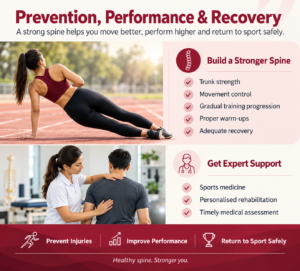
1. Regain and develop trunk strength
The trunk muscle helps to perform movements and transfer forces from the upper body to the lower body and vice versa. Sport-specific exercise for strength and endurance is useful, but the types of exercises should meet the needs of a particular athlete and sport.
2. Enhancement of Movement Control
Usually athletes need to control movement around the torso, hips, and limbs in movement tasks that are relevant to sport. This depends on instruction and training of the athletes.
3. Gradual Progression of Training
The training load is an important factor for athletes as their fitness level is important for recovery and performance. The increase in load must be pre-planned instead of being done spontaneously.
4. Emphasis on Recovery
Some of the activities for faster recovery may include getting enough sleep, eating properly, drinking enough water and resting after rigorous activities helps with recovery.
5. Incorporation of Proper Warm-up
A proper warm-up is a good preparation for the regimen of exercises involved during training.
Published on October 27, 2026
Spinal Health and Rehabilitation in Athletes
The treatment of backache in athletes will depend on its cause, severity, and functional impact on the athlete. A sports medicine physician, physiotherapy specialist, or another qualified healthcare professional may be involved in assessing the condition.
Rehabilitation may require depending upon the intensity of exercise, weight and mobility training, retraining movement patterns, and sport-specific conditioning. The process of returning to sport is based on clinical examination, the athlete’s ability to function.
Medical assessment is necessary if pain does not become less or worsens.
The athlete should seek immediate medical assistance if serious trauma is suspected.
Conclusion
Maintaining a healthy spine is important for sports performance, training consistency and overall health.Knowing the needs of a sport, increasing training slowly, getting enough rest, and noticing early signs of injury can help athletes stay healthy and avoid injuries.Personalized training programs, specialized evaluations and proper rehabilitation enable trainers to practice safely and return to sports confidently.
Published on October 27, 2026
Contact us
