

The Future of Media is Not Journalism
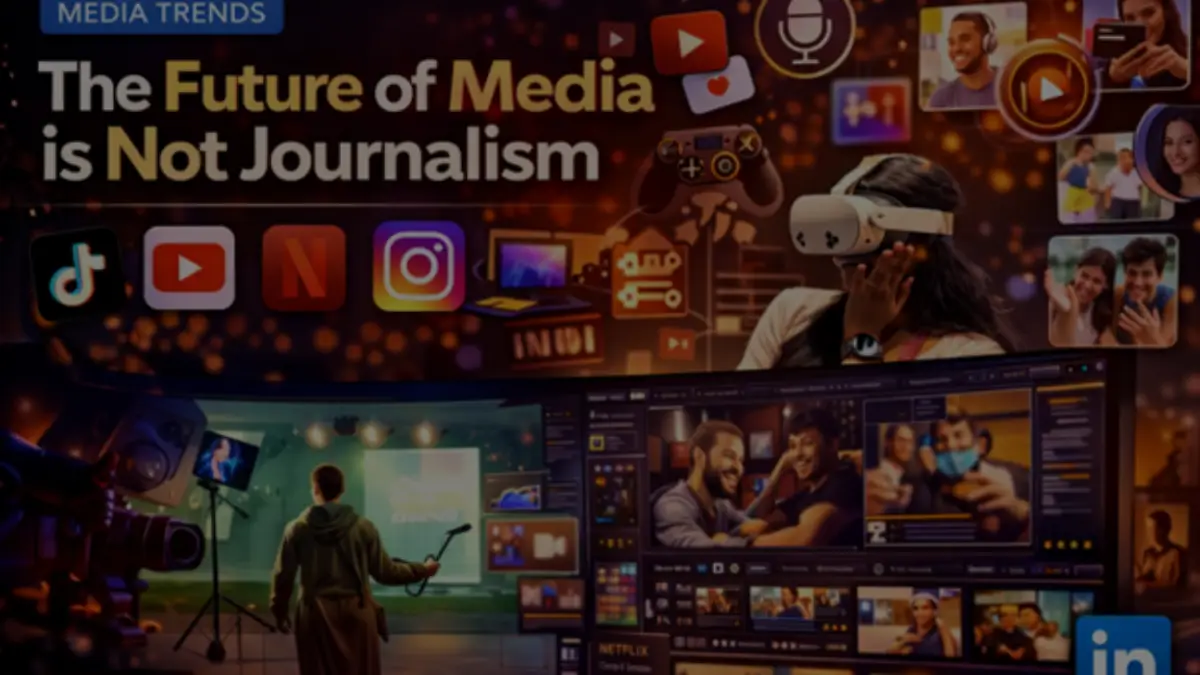
For decades, journalism was seen as the core of the media industry. While it continues to play a critical role in informing society, the reality today is that media has expanded far beyond traditional newsrooms. The future of media lies in the intersection of the creator economy, digital platforms, and strategic communication roles.For students exploring a communication and media studies degree or considering a media degree course after 12th, this shift opens up a much wider range of career opportunities than ever before.
Here’s how the media landscape is evolving:
- The Rise of the Creator Economy
The creator economy has transformed individuals into media brands. Content creators today build audiences, influence opinions, and collaborate with companies to create impactful campaigns. This has created careers not only for creators but also for professionals who manage, strategise, and scale creator-led content. - Digital Platforms as Media Powerhouses
Platforms like YouTube, Instagram, and Spotify have redefined how content is produced and consumed. The media is no longer controlled by traditional institutions alone. Instead, digital platforms have become the primary space where audiences engage with stories, entertainment, and information. - Strategy is the New Core Skill
Today, success in media is not just about creating content but about understanding audiences, platforms, and timing. Roles such as content strategists, media planners, and digital campaign managers are becoming central to the industry. These professionals shape how content reaches the right audience and achieves measurable impact. - Brand-Led Storytelling
Many of today’s most influential stories are told by brands rather than news organisations. From social campaigns to branded content, storytelling is increasingly aligned with marketing objectives, requiring both creativity and strategic thinking. - Expanding Career Opportunities
Students enrolled in a media studies course in Mumbai or a mass media course in Mumbai are now exposed to areas such as digital content creation, platform strategy, audience analytics, and campaign planning. These skills prepare them for careers that go far beyond traditional journalism.
The key takeaway is clear: journalism is no longer the only or even the dominant pathway in media careers. The industry today is driven by content creators, digital platforms, and strategic communication professionals who understand how to engage audiences in a fast-changing environment.
For those considering creative careers after 12th, media offers a future that is dynamic, diverse, and full of possibilities beyond what was once imagined.
– Saurabhi S
Published on May 2, 2026
Contact us
